
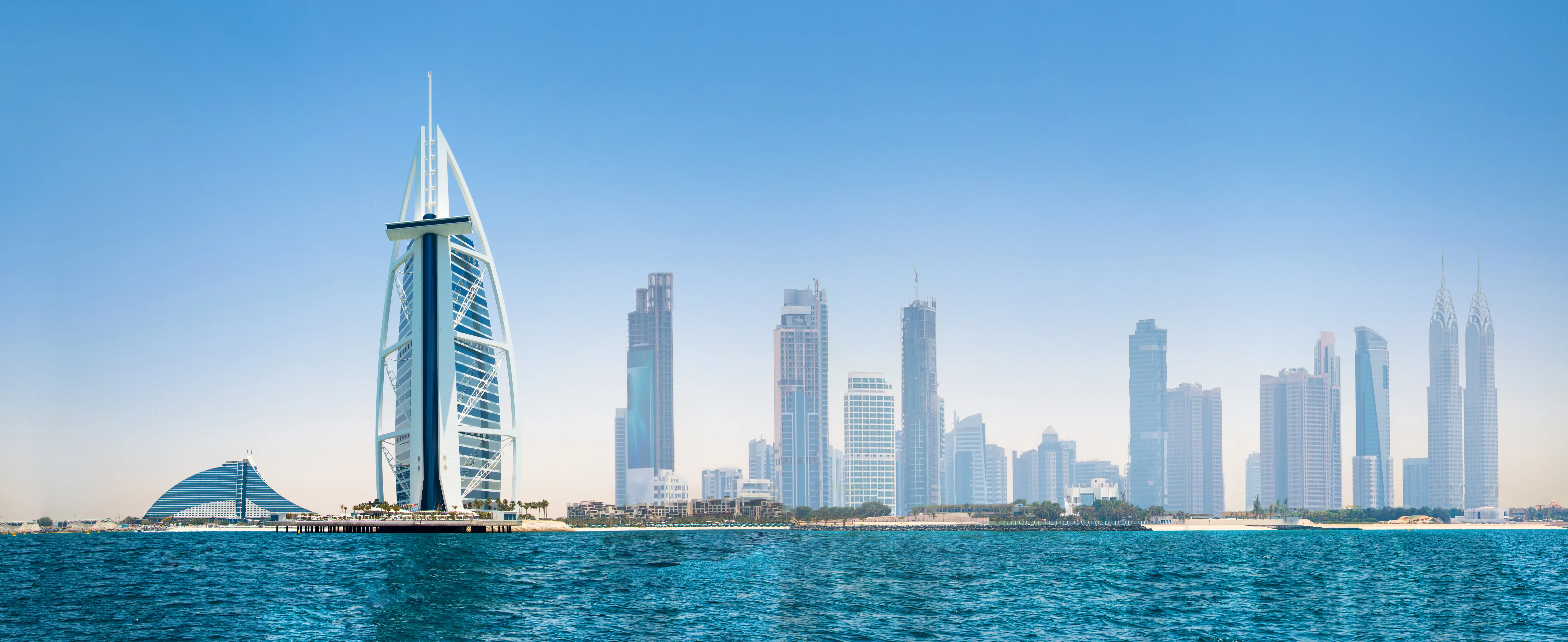
The Gulf is no longer a peripheral allocation within emerging markets; it is rapidly becoming one of the most compelling investment opportunities globally. Home to approximately 40% of global sovereign wealth fund assets, the six-country Gulf Cooperation Council (GCC) sits at the nexus of capital, economic reform, and long-term strategic ambition. Across Bahrain, Kuwait, Oman, Qatar, Saudi Arabia, and the United Arab Emirates, governments are reshaping their economies, deepening capital markets, and attracting global investment. Yet despite the scale of the opportunity, many institutional investors still lack an efficient way to access the region, with no single, disciplined benchmark designed to capture the GCC’s leading listed companies.
That changes today with the launch of the Jefferies GCC 30 Index, a rules-based benchmark covering the 30 most liquid listed names across the GCC. Built for institutional clients, the index serves as a portfolio construction tool and an underlying benchmark for derivatives and structured products. Despite conflict roiling the region through the first half of 2026, the GCC is a generational investment story set to unfold over decades.
Why now?
The Gulf of 2026 is not the Gulf of 2016. A region long defined by the price of oil, it has undergone one of the most ambitious economic transformations anywhere globally.
Saudi Vision 2030, the UAE’s “We the Emirates 2031,” and Qatar National Vision 2030 are not just slogans; they are capital-allocation frameworks reshaping how these economies earn, spend, and invest. Non-oil activity now accounts for the majority of GDP in both Saudi Arabia and the UAE, and that share is rising across the bloc.
The capital behind this transformation is staggering. Together, GCC sovereign wealth funds hold roughly $4 trillion in assets, making them one of the world’s most concentrated pools of strategic capital.
Sovereign wealth funds are deploying material levels of capital into domestic industries that did not meaningfully exist a decade ago, including tourism, logistics, technology, renewables, entertainment, and sport.
International capital is following suit. Foreign direct investment (FDI) into Saudi Arabia has reached ~$25 billion a year, compared with a 2030 target of $100 billion. The UAE attracted $46 billion in 2024, making it the world’s tenth-largest FDI destination. Crucially, those flows are also concentrated almost entirely in non-oil sectors.
FDI is the most credible vote of confidence that international capital can offer because it requires on-the-ground commitment rather than a reversible trade.
A capital market beyond oil and banking
Global technology is also treating the Gulf as a strategic priority. Microsoft committed $1.5 billion to G42 in Abu Dhabi. Google opened a cloud region in Riyadh. AWS now operates cloud regions in both Saudi Arabia and the UAE.
Saudi Arabia’s Regional Headquarters program, which, since 2024, has required companies bidding for government contracts to base their regional headquarters in the Kingdom, has secured commitments from more than 500 international firms, including PepsiCo, Deloitte, PwC, Bechtel, Siemens, Pfizer, Halliburton, Schlumberger, Unilever, and Boeing. Meanwhile, Abu Dhabi’s ADGM and Dubai’s DIFC have emerged as genuine global hubs for alternative asset management.
Local equity markets have grown in tandem. The Saudi Exchange’s market capitalization has expanded from roughly $450 billion a decade ago to more than $2.7 trillion, while the Abu Dhabi Stock Exchange has grown from $120 billion to over $800 billion. Since 2019, the regional IPO pipeline has been among the most active globally, with many non-energy-based listings, materially deepening the investable universe. Regional equity markets have also undergone structural transformation, with foreign ownership limits relaxed and even removed, settlement cycles modernized to meet global developed-market standards, short selling and securities lending introduced, and derivative markets developing.
A differentiated profile within EM
The GCC risk-return profile genuinely differentiates it within emerging markets:
- Dollar-pegged currencies remove a primary source of EM volatility.
- Sovereign balance sheets are strong, and the region is a net exporter of capital rather than a borrower dependent on external financing.
- Dividend yields among large-cap stocks across the GCC remain among the most attractive in EM, and earnings growth is increasingly driven by domestic demand and structural reform rather than the commodity cycle.
- Low correlation to China, India, and Latin America makes the bloc a useful diversifier within a global EM allocation.
The conflict in Iran has offered a stark reminder that oil still matters in the region, and geopolitical risk is a constant. Governance and disclosure standards have improved markedly but continue to evolve. None of this is unusual for an emerging market; what is unusual is how well these risks are now understood and priced.
Why an index?
Despite the GCC’s growing weight in the MSCI Emerging Markets (EM) Index, from 3% a decade ago to a peak of 7.2% in 2025, international institutional ownership remains below the level implied by the structural case. The Jefferies GCC 30 provides an investible gateway for our clients to benchmark and structure their exposure to the region. It is rules-based and free-float-weighted with fast-track IPO entry. It spans sectors that include financials, consumer, healthcare, technology, real estate, industrials, energy, and logistics. Liquidity varies across the six markets, so our index focuses on the most liquid, investable names.
Jefferies has intentionally kept the construction simple so that the index reflects the market rather than a reengineered version of it. We partnered with Solactive to provide the independent administration, governance, and transparency that global institutions require. As Michael Malkoun, Jefferies’ Middle East and North Africa (MENA) index strategist, has noted, the GCC 30 is designed to be the key benchmark upon which ETFs, swaps, and structured products can be built, representing the largest and most institutionally investible companies in the region.
Our commitment to the region
The Jefferies GCC 30 reflects the Firm’s longstanding and ongoing commitment to this region. We have consistently invested in our Central and Eastern Europe, Middle East, and Africa (CEEMEA) franchise across sales and trading, research, and banking, and we continue to expand our local presence throughout the region. Our ambition is to be the partner of choice for global clients accessing the region and for regional clients accessing global markets. The story of global capital markets over the next decade will, in part, be written in the Gulf. We intend to help our clients position themselves to participate in that story.