
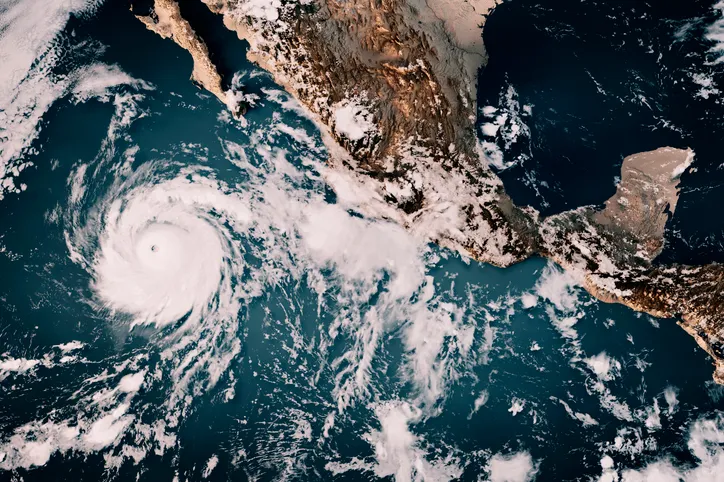
A potentially historic El Niño could disrupt food supplies and power systems into 2027. Jefferies research examines where those pressures may challenge earnings assumptions and create opportunities.
Every few years, warming waters in the equatorial Pacific alter rainfall and temperature patterns around the world. Markets have learned to treat El Niño as a seasonal curiosity: something for commodity traders and insurance actuaries to watch, but rarely a top-of-mind macro theme. The 2026-27 event should change that calculus.
The 2026-27 El Niño is intensifying at a historic pace, with multiple forecasting models suggesting it may become the strongest on record. Analysis by Berkeley Earth climate scientist Zeke Hausfather, reviewing 14 climate models through July, points to this Super El Niño being the strongest by “a truly mind-blowing margin”.
The developing El Niño could complicate the outlook for inflation and growth well beyond the regions facing the most severe weather. Agricultural losses, water shortages and higher cooling demand can raise costs while weakening production and household purchasing power. A recent Jefferies research report, drawing on contributions from nearly 50 analysts and examining more than 150 stocks, identifies South and Southeast Asia as the center of the risk. Its analysis also shows how the same weather event can support some businesses while pressuring others. The investment question is how changes in supply, demand and operating costs translate into earnings, and whether those effects are already reflected in expectations.
Why This Cycle Warrants Attention
Three things set this cycle apart from 2015-16 and 1997-98, the last two events strong enough to move markets.
First, the starting point is fragile. Global food inventories are already strained. Geopolitical disruptions in Iran and Ukraine have chipped away at the resilience of fertilizer flows and grain exports well before the first drought has even bitten. There is little slack left to absorb a shock.
Second, the economics are trackable well in advance, and early loss estimates are already large. Unlike a hurricane or an earthquake, El Niño telegraphs itself for months. The Peterson Institute for International Economics estimates contemporaneous global losses of roughly $686 billion (about 0.6% of GDP), with cumulative losses potentially reaching $3.1 trillion over five years. For comparison, the 1997 and 2015 events cost the world an estimated $2.1 trillion and $3.9 trillion respectively, according to Dartmouth researchers.
Third, the exposure is concentrated where the world can least afford it. South and Southeast Asia sit at the intersection of nearly every vulnerable commodity: rice, wheat, palm oil, coffee, and sugar production all cluster in the same drought-prone geography. Indonesia and Malaysia account for roughly 85% of global palm oil production, Vietnam is a major robusta coffee exporter, India and Thailand are important rice exporters and Australia is also a major wheat exporter. This concentration allows regional production shortfalls to transmit rapidly into global supply chains well beyond Asia.
Concurrent production losses across major exporting countries could reduce the ability of alternative suppliers to cushion global food markets.
The Shape of the Shock: A Four-Quarter Story
Analystsexpect the disruption to unfoldin stages:
Q3 2026 — Early water stress: weakening monsoons, rising temperatures, and the first signs of drought across South and Southeast Asia and Australia.
Q4 2026 — Peak climate disruption: drought intensifying across Australia, Indonesia, and Southern Africa, while East Africa and parts of South America face the opposite problem: flooding.
Q1 2027 — Commodity effects surface: harvests reveal the extent of the damage, inventories are drawn down, and export restrictions (particularly from India) become a live policy risk for net importers.
Q2 2027 — Inflation and growth effects become most pronounced, even as the meteorological event itself begins to fade. Economic effects significantly outlast the weather.
This lag matters for positioning. The market tends to price weather events in real time, but the real earnings impact for many companies won’t show up until well into 2027.
How the Money Moves: Key Industry Takeaways
Food supply pressures and inflation could persist into 2027. Rice, sugar, palm oil, cocoa, coffee, and fishmeal all face simultaneous supply risk. The 2023-2024 El Niño saw cocoa prices surge 250%, sugar hit its highest price in more than a decade, and several rice exporters closed their borders. This cycle is forecast to be more severe. Past analysis from the European Central Bank estimates global food commodity prices could rise by up to 9% in the event of a strong El Niño, with more recent estimates placing the figure closer to 15%. Central banks may treat food price increases as temporary supply shocks. However, persistent pressure on headline inflation could nevertheless delay rate cuts in affected economies, even as weaker production and household spending weigh on growth.
Water stress links energy demand and growth. The economic exposure extends beyond agriculture. Reduced rainfall can lower hydropower generation just as higher temperatures increase electricity demand for cooling. Water shortages can also constrain mining and industrial operations, while extreme heat reduces labor productivity. These overlapping pressures are particularly important in South Asia, where many workers are exposed to outdoor heat.
Shipping gets a counterintuitive tailwind. Drought can restrict Panama Canal capacity, forcing changes to vessel loading and shipping routes, lengthening sailing distances as ships reroute around the Cape of Good Hope. During the 2023-24 El Niño, Panama Canal restrictions reduced effective container shipping capacity and increased dry-bulk sailing distances. A repeat could support freight rates, particularly for operators with transpacific routes. Low water levels on the Rhine and Danube can similarly constrain the movement of industrial inputs in Europe. Companies with limited direct agricultural exposure may still face higher freight and electricity costs.
Insurers may view El Niño as a net positive. Australian insurance analysts expect a shift away from the flood, cyclone and East Coast storm losses that drove the costly 2020-23 La Niña period toward hotter, drier conditions that lift bushfire, drought and heat risk. Since floods and cyclones drive Australia’s largest insured losses while bushfires are historically less costly in aggregate, El Niño events are estimated to result in lower claim severity, implying lower losses, better insurance trading margins and potentially lower reinsurance costs into FY28. Globally, the same dynamic extends to reinsurers benefiting from typically suppressed Atlantic hurricane activity in El Niño years, though a second consecutive benign catastrophe year also risks softening reinsurance pricing further into 2027.
Cooling demand creates some of the clearest beneficiaries. District cooling operators in the Gulf and room air-conditioner makers in India stand to benefit directly from hotter conditions. Power utilities may also gain from higher electricity demand and wholesale prices, although prolonged heat can place additional strain on generation assets.
Agricultural equipment could be nearing an inflection point. Farmers who suffer significant harvest losses may reduce spending, while producers with resilient output could benefit from higher crop prices. Jefferies sees the potential for stronger farmer income to support a recovery in demand for depressed ag-equipment names into 2027 and beyond. The outcome depends on where production losses occur and how higher prices affect farm profitability.
Consumer staples face a genuine margin test. Companies exposed to coffee, West African cocoa, Southeast Asian palm oil, dairy or edible oils face renewed input-cost inflation precisely when several had been guiding toward margin recovery on the assumption that recent commodity deflation would persist.
The Investor’s Edge: Assessing Resilience Before Disruptions Materialize
Unlike most climate risks, El Niño is highly trackable months in advance, giving investors an opportunity to identify economic consequences before they fully materialize. The event is forecast, the historical playbook exists, and the affected commodities and geographies are already known.
Companies are already diversifying sourcing, strengthening irrigation and water infrastructure, and purchasing supplies in advance. These measures can reduce immediate exposure. Sustained water stress could also encourage investment in precision agriculture and technologies that improve crop resilience.
Investors can assess this preparedness alongside the earnings assumptions most vulnerable to disruption. As the event develops, rainfall, reservoir levels, crop conditions and export policies will help test those assumptions.
Companies’ sourcing flexibility, physical infrastructure and capacity to recover higher costs will help determine how weather pressures translate into margins and cash flow through 2027.
What separates winners from losers over the next 18 months will likely be decided before the 2027 numbers arrive.
For a full breakdown of regional exposure and more than 150 individual stock calls, see the complete Jefferies note, Super El Niño: Regional Impacts + Stock Implications from Nearly 50 Analysts (September 14, 2026).