
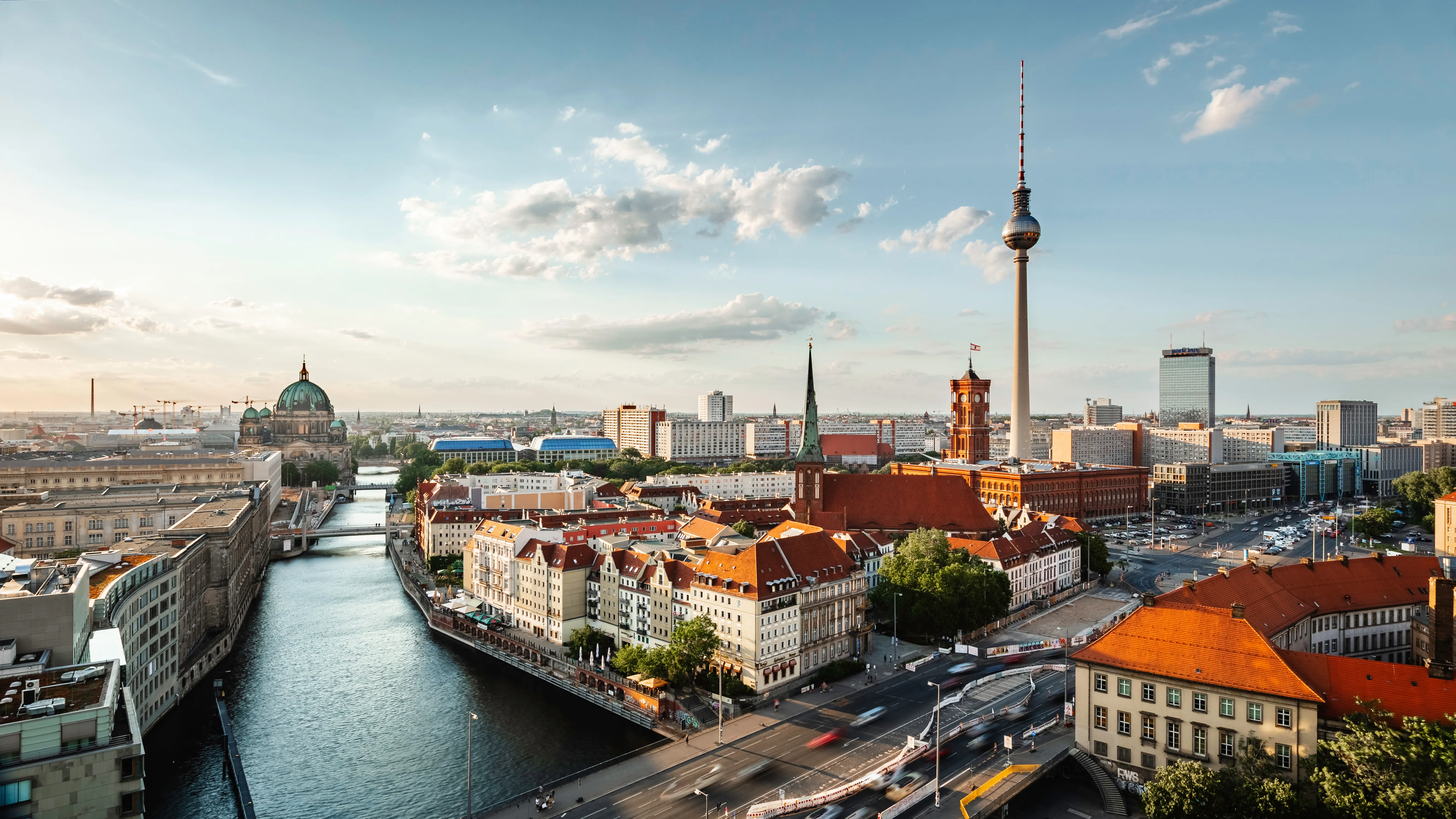
Nestled at the edge of Germany’s Black Forest, Baden-Baden has long been known as one of Europe’s most elegant destinations. The UNESCO-listed spa town combines more than 2,000 years of history with a reputation for bringing together influential leaders, investors, and decision-makers in a setting designed for meaningful conversations.
On June 23-24, Jefferies will host its inaugural German and Swiss Conference in Baden-Baden, bringing together investors and senior executives from some of the most important companies across the DACH region. The conference will provide a forum for investors to test investment theses, assess sector outlooks, and engage directly with management teams operating at the heart of Europe’s industrial, healthcare, technology, and financial ecosystems.
Ahead of the event, we sat down with Martin Comtesse, Managing Director Head of Continental European Equity Research, Johannes Kirchmeir, Managing Director, Head of Continental Execution, and Marco Ritsch, Head of DACH Equity Sales and Head of Jefferies’ Swiss Branch, to discuss the themes they believe will shape investor conversations in Baden-Baden.
1. Germany’s Investment Cycle Is Moving From Anticipation to Execution
Few topics have generated as much debate among investors over the past year as Germany’s fiscal stimulus plans and their potential impact on economic growth.
While the announcement of significant investment initiatives in infrastructure, defence, energy security, and industrial modernisation sparked enthusiasm across markets, investors are now focused on execution and timing.
“The market initially reacted very positively to Germany’s stimulus plans,” says Comtesse. “We saw a re-rating in construction and infrastructure-related names, but that enthusiasm has cooled as investors wait for the funds to translate into tangible projects and earnings growth.”
For investors, that creates an important opportunity. Expectations have moderated, valuations remain attractive in many areas of the market, and direct engagement with management teams can help identify which companies are best positioned to benefit as spending begins to flow through.
“We think 2027 could be the point where investors begin to see the first meaningful impact in company earnings,” Comtesse says. “Right now, it’s very much a ‘show me’ story.”
Kirchmeir believes the conference arrives at a particularly important moment. “Germany remains the world’s third largest economy, but growth has been subdued for several years,” he says. “We’re moving from the announcement to a focus on execution. This conference provides an opportunity to take the pulse of German corporates and gain a real-time reading on the economy.”
2. Europe’s Competitiveness Agenda Is Creating Winners and Losers
Beyond fiscal stimulus, companies across Europe are adapting to a volatile geopolitical and economic landscape.
Questions around supply chain resilience, strategic autonomy, defence spending, energy security, reshoring, and trade policy are reshaping corporate decision-making and creating new competitive dynamics across industries.
“There is a new European playbook emerging,” says Comtesse. “Whatever the industry, companies are increasingly positioning themselves around themes of strategic autonomy and geopolitical resilience.”
At the same time, businesses continue to navigate rising input costs and ongoing supply chain pressures. “Supply chains remain a major topic,” says Kirchmeir. “Companies are managing everything from semiconductor availability to energy costs and inflation across key inputs. Investors want to understand how management teams are balancing pricing, margins, and demand.”
3. Switzerland Continues to Offer Defensive Growth Characteristics
While Germany offers exposure to a potential cyclical recovery, Switzerland continues to stand out for its resilience, innovation, and concentration of global market leaders.
The country’s economy is well diversified and remains home to world-class companies across pharmaceuticals, medical technology, financial services, specialty chemicals, luxury goods, and precision manufacturing.
“Currency remains an important topic,” says Comtesse. “The weaker U.S. dollar has created significant volatility in the Swiss franc, although we expect some normalisation as the year progresses.” Despite currency fluctuations, Swiss corporates have continued to demonstrate resilience. “Inflation has been far less of a challenge in Switzerland than in many other markets,” Comtesse says.
Ritsch believes Switzerland’s strengths extend beyond its established corporate champions. “Switzerland offers a strong talent pool supported by world-class institutions such as ETH Zürich, which is increasingly attracting hyperscalers who want to tap into local expertise,” he says. “Combined with an attractive tax framework and a supportive startup ecosystem, that has helped Switzerland maintain its position as one of Europe’s leading innovation hubs.”
While high labour costs and a strong currency remain structural headwinds, Ritsch notes that Switzerland has consistently adapted by focusing on high value-added industries where it can maintain a competitive edge. Pharmaceuticals and financial services should remain primary drivers, with consumer and luxury potentially seeing spillover benefits.
4. Innovation Remains a Defining Theme Across DACH
Innovation is likely to feature prominently throughout conference discussions, reflecting the region’s strengths in advanced manufacturing, healthcare, software, automation, and next-generation technologies.
Switzerland’s research and development ecosystem continues to generate globally relevant innovation, while Germany’s industrial engineering base remains central to Europe’s manufacturing leadership.
Artificial intelligence is expected to be a major focus.
“AI will be a hot topic for Switzerland. We’re witnessing a structural supercycle” says Kirchmeir. “The key question investors are increasingly asking is how companies will monetise AI and where sustainable value creation will emerge.”
“For the rest of 2026, selectivity will remain key,” Ritsch says. “Markets are likely to reward companies with strong balance sheets, pricing power, credible innovation pipelines, and clear AI applications that deliver measurable efficiency gains.”
Looking further ahead, Ritsch expects AI to become less of a standalone investment theme and more of a core business capability: “The focus will increasingly shift from whether companies are adopting AI to how effectively they are embedding it into their operations to improve productivity, decision-making, quality, and speed.”
5. Stock Selection Matters More Than Ever
Perhaps the most important theme underpinning this year’s conference is the growing importance of active management and stock selection.
Macro conditions remain complex. Fiscal stimulus, monetary policy, currency movements, tariffs, geopolitical developments, and shifting trade patterns are creating both opportunities and risks across the region.
Against that backdrop, direct access to management teams has become increasingly valuable.
Comtesse points to Germany’s mid-cap universe as a particularly compelling area for investors willing to look beyond the headlines.
“Many large-cap German companies have substantial international exposure, but mid-caps remain much more closely tied to the domestic economy,” he says. “They’ve been heavily punished since 2022 and are trading at historically low relative valuations. There is very little optimism priced into many of these businesses today, despite some very attractive growth stories.”
For investors seeking to distinguish between temporary macro noise and durable company-specific opportunities, management access and direct dialogue remain essential tools.
Looking Ahead to Baden-Baden
For Jefferies, the conference reflects the firm’s continued investment in Germany, Switzerland, and the entire DACH region at a time when many competitors have reduced their presence.
“This is the first time we’re hosting this conference, and it’s something we’re genuinely excited about,” says Comtesse. “While others have pulled back from local markets, Jefferies has continued to invest in having a broad market presence. Having a flagship conference in a location like Baden-Baden is a meaningful statement of intent.”
Kirchmeir agrees, “This conference underscores our long-term commitment to Germany, Switzerland and the investment we continue to make in the region,” he says.
The choice of Baden-Baden is also deliberate. Removed from the bustle of Frankfurt and London, the intimate setting is designed to encourage deeper conversations, stronger connections, and a more focused exchange of ideas.
“It’s an exceptional setting,” says Kirchmeir. “Being away from the major financial centres creates an environment where investors and corporates can spend real time together.”