As Dubai cements its role as a global capital for trade, innovation, and investment, Jefferies once again brought together leading corporates and investors from across Asia, the Middle East, and South America for its second annual GEMS (Global Emerging Markets) Conference, held November 24–25, 2025.
Following a successful debut in 2024, the conference has quickly become one of the region’s most anticipated investor gatherings, featuring one-on-one meetings and focused conversations with C-suite leaders from across emerging markets.
At the conference, Walid Armaly, Co-Head of MENA Equities at Jefferies, and Desh Peramunetilleke, Head of Quantitative Strategies, discussed how emerging markets (EMs) have evolved from a focus on foreign-exchange and commodities trading to a broader mix of manufacturing, infrastructure, consumer spending, and technology. They outlined the opportunity and risk set in these markets, the themes shaping investment, the post-pandemic rotation of capital away from China, and more.
The New Shape of Emerging Markets
Historically, EMs have not been a major part of institutional portfolios. And even with the recent surge in capital inflows, they remain underrepresented relative to their scale. “Emerging markets are 40% of the global GDP and represent about 70% of global growth, but they’re only 11% of the MSCI World Index,” Mr. Peramunetilleke explained. “This is an immense opportunity.”
Part of this opportunity comes from how EM economies have changed. “Traditionally, emerging markets have been all about currency and commodities,” he said. “But this is now changing: high-tech manufacturing, consumer spending, infrastructure.” These sectors are expanding quickly across regions, supported by stronger balance sheets, improving corporate governance, and a more sophisticated policy environment.
Capital rotation has played a central role as well. Post-pandemic, investors have diversified away from a China-dominant framework toward a broader mix of Asia and MENA. The Middle East, India, and South Korea have been key beneficiaries.
MENA’s Expanding Role in Global Portfolios
Nowhere is EMs maturation more apparent than in the Middle East. The region’s share of MSCI EM has risen steadily, from less than 2% a decade ago to roughly 7% today. As Mr. Armaly put it, “It’s become very hard to ignore… We’re seeing increased interest in the region with investors coming to visit, looking to meet companies and host reverse roadshows, and meet with exchanges. It’s been fantastic for capital inflows.”
Dubai, in particular, has emerged as a powerful magnet for businesses, talent, and capital. “We’re seeing about 1000 people move per day to Dubai to set up businesses and to live,” Mr. Armaly said. This influx has supported not only the real economy but also the development of deeper, more dynamic capital markets across the Gulf.
Structural advantages further reinforce the region’s appeal. Demographic strength, ongoing social and labor-market reforms, and improving market infrastructure all point to continued expansion. “We see, across the region … continued pick up in capital-markets activity and proactive exchanges looking to improve market structure,” Mr. Armaly explained.
Opportunities and Risks in EM Investing
Across EMs, investors are positioning around a set of long-term themes that extend beyond traditional macro drivers. In the Middle East, Mr. Peramunetilleke pointed to growing interest in the energy transition, manufacturing and relocation, and digital infrastructure. These align closely with national transformation plans, large-scale infrastructure build-outs, and investment in logistics and connectivity.
Alongside these positive themes, risks remain part of the equation. A U.S. recession would pose a headwind, and geopolitical tensions continue to shape capital flows. “Geopolitics are the biggest risk,” Mr. Peramunetilleke cautioned, though he noted that if EM corporations deliver earnings growth, “valuation is not going to be a concern.”
Other EMs to Watch: India & Korea
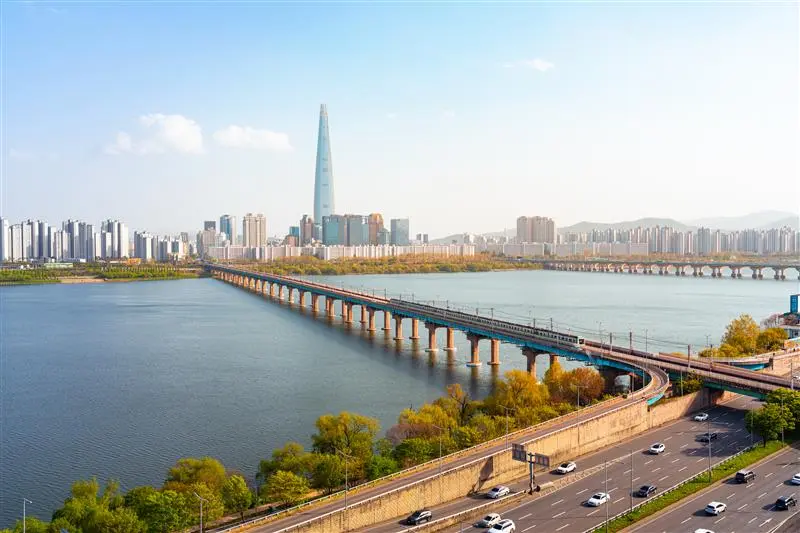
The post-China rotation has brought several Asian markets into sharper focus for global investors. India and Korea, in particular, have become key priorities for institutional portfolios.
“Infrastructure reforms have certainly made a big difference for India,” Mr. Peramunetilleke noted, and Korea’s exchange reforms and value-up initiatives “have made a big difference to attracting more capital flows.”
Final Thoughts: A Bullish Outlook on Emerging Markets
In the long term, both speakers expressed strong confidence in the trajectory of EMS. Earnings expectations remain healthy, deregulation is accelerating in key markets, and consumption and infrastructure spending continue to expand.
For investors evaluating opportunities in MENA specifically, Mr. Armaly offered a simple piece of advice: “Seeing is believing.” The pace of development and the scale of economic transformation underway are easiest to appreciate by visiting the region and getting on the ground.